


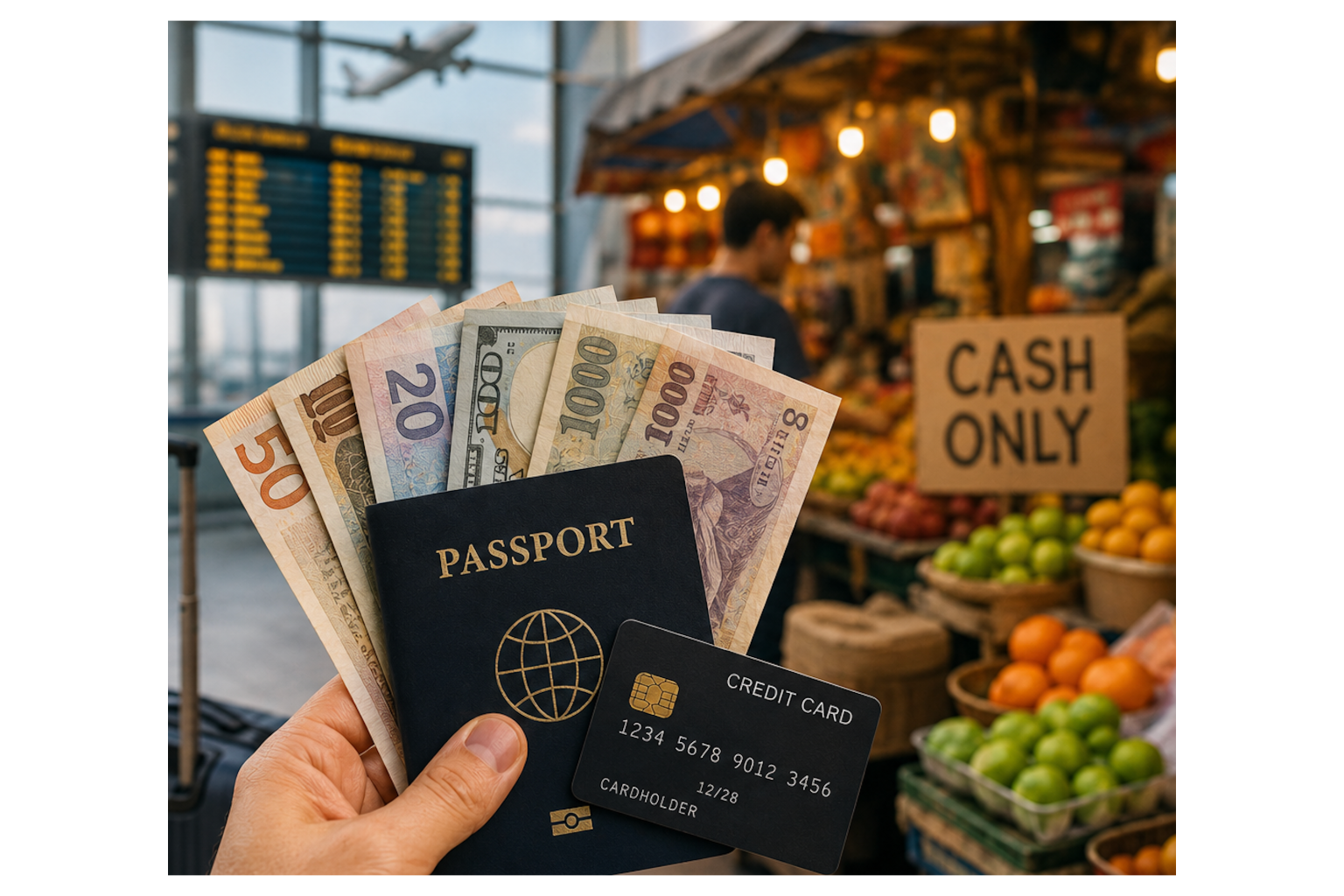
MONTREAL, July 21, 2026 /CNW/ -- As Canadians continue to embrace digital payments at home, experienced travelers know that carrying local currency remains one of the smartest ways to prepare for international travel. In a new travel guide, ICE Exchange Corporation Canada explores why cash still plays an essential role in many destinations around the world despite the rapid growth of digital payments.
The Illusion of 100% Digital Travel
For years, we've been told that cash is disappearing. In Canada, mobile payments seem omnipresent and effortless. So why bother carrying banknotes when traveling abroad? At home we shop in familiar stores, use the same banks, rely on trusted payment networks, and rarely question whether our credit or debit card will work. It's a system we've learned to take for granted.
Travel changes all of that. The moment we leave the country, we also leave behind the payment ecosystem we know and enter a world of different banking systems, payment technologies and consumer habits.
Payment habits that work perfectly in Canada don't always work abroad. That's why experienced travelers rarely depend on a single payment method. Cards are incredibly convenient, but local currency remains one of the most reliable travel tools you can carry. Smart travelers don't pack cash because they distrust technology. They do so because they understand that travel is unpredictable.
Reserve your currency here for the best rates and easy pickup.
There Is No Universal Way to Pay
There is no single "best" way to pay abroad because there is no universal payment culture. Every destination has developed its own habits, technologies and consumer preferences. Understanding them before you travel can save time, money and unnecessary stress. Broadly speaking, today's travelers will encounter three very different payment ecosystems.
- Cash-First Destinations (Japan, Germany and many Southeast Asian countries). Cash is still essential for many everyday purchases. Carry enough local currency for transportation, meals and small purchases.
- Card-First Destinations (UK, Sweden, Norway, Denmark, Finland and Australia). Cards are accepted almost everywhere, and cash is becoming the exception. However, carrying a small amount of local currency remains a good backup.
- Mobile-First Economies (China). Mobile payment apps dominate everyday transactions, making advance preparation essential for foreign visitors. Carrying enough local currency for one day's expenses is also recommended.
The smartest travelers prepare not only for what is familiar, but also for what will be different. Every destination has its own payment culture, technologies and consumer habits. Local bakeries, independent cafés, beer gardens, public markets, taxis, food stalls and family-owned businesses may still refuse electronic payments, especially for small purchases. Travelers who arrive with local currency enjoy the experience without interruption, while others often waste valuable vacation time searching for an ATM and paying unnecessary foreign withdrawal fees.
Payment Outages
Even if you understand the local payment culture, technology can still become the weakest link. According to the European Central Bank, 22% of consumers have experienced a technical issue while making a point-of-sale payment, and one in ten digital transactions fails on the first attempt. We trust technology because it works most of the time, but when traveling, "most of the time" may not be enough.
A 2026 FreedomPay study found that businesses experience several payment outages each year, with the average disruption lasting approximately 67 minutes. Major incidents, including the 2018 Visa outage in Europe and the global CrowdStrike outage in 2024, demonstrate how quickly travelers can lose access to electronic payments.
When payment systems fail, travelers carrying local currency can simply continue their day.
Cards Are Convenient--Until They Aren't.
Cards are extremely convenient, but they are not foolproof. Transactions may occasionally be declined because of fraud prevention systems, differences in local payment practices or limited network connectivity. Language can also become an unexpected obstacle, as payment terminals and ATMs often display messages only in the local language. In some destinations, payment terminals require a live network connection to authorize international transactions, which may not always be available. None of these situations is common enough to avoid using cards. They simply highlight one reality: when you travel internationally, you are no longer operating within the payment system you use every day at home. Carrying local currency is simply another way to stay prepared.
Local Currency Is a Form of Travel Insurance
Few people think about it this way, yet physical currency is a genuine form of insurance. Travel experts often recommend carrying enough local currency to cover at least 24 to 48 hours of essential expenses, including transportation, meals, tips, and unexpected situations.
Think of it as the financial equivalent of carrying a spare tire. You hope you'll never need it--but if you do, you'll be glad it's there.
Be Prepared Before You Fly
There are several ways to obtain foreign currency before departure. One of the most convenient is ICE Currency Exchange Click & Collect. Travelers can reserve their currency online at competitive exchange rates and simply collect it at participating Canadian airports before departure.
Travel isn't about choosing between cash and cards. It's about knowing when each one works best. ICE Currency Exchange serves travelers at most major Canadian airports, making it easy to reserve foreign currency online and collect it before departure. Instead of spending your first hour abroad searching for cash, spend it enjoying your destination. To reserve foreign currency before you travel, visit https://www.ice-canada.ca/en/.
Reserve online and collect at: